Hybrid nanophotonic interfaces for quantum light
We build interfaces between photonic waveguides and solid-state quantum emitters. By coupling these systems at the nanometer scale, we aim to control single photons, engineer light–matter interaction, and explore physics that emerges only in the hybrid regime.
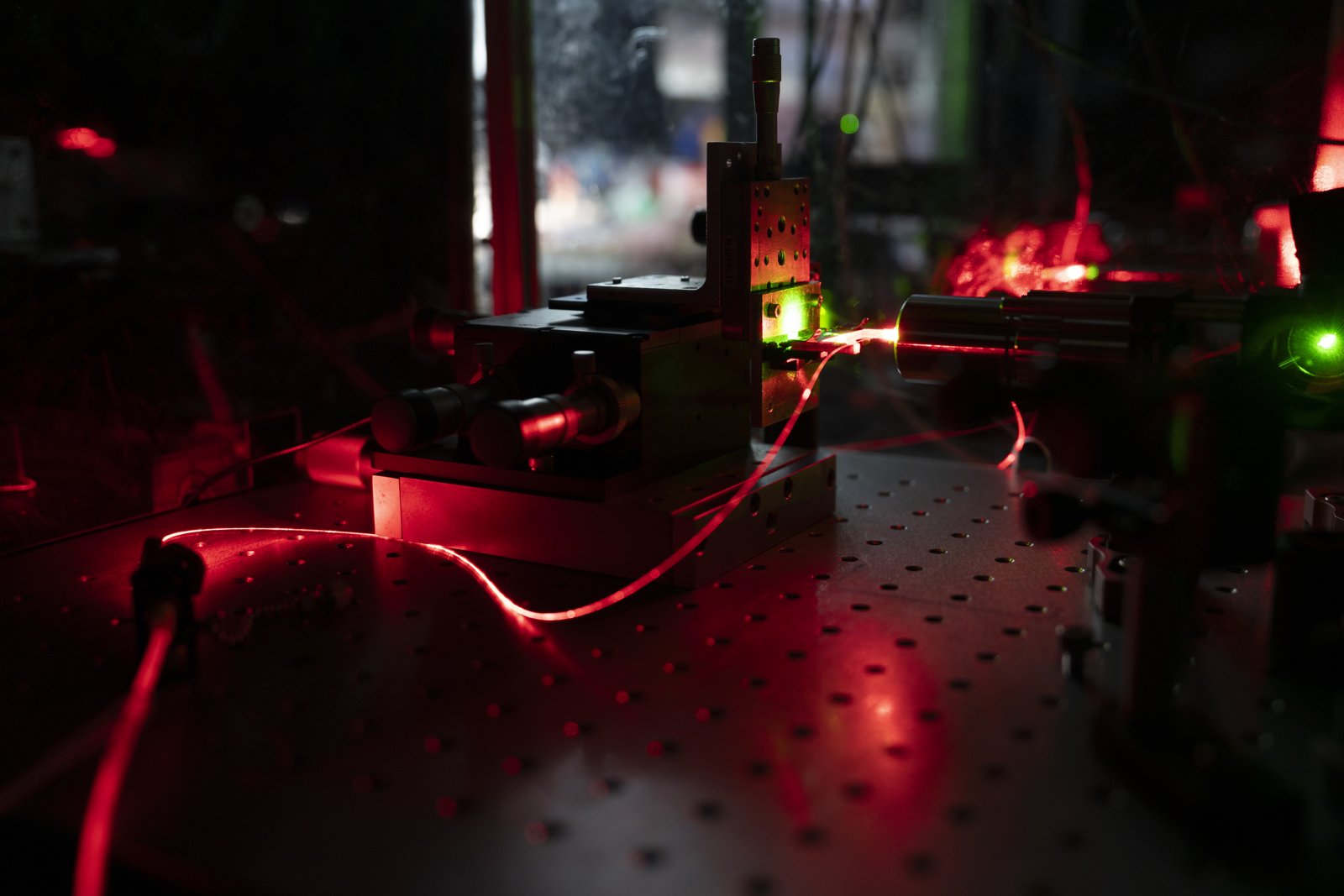
Nanophotonics structures with optical nanofibers
One of the most commonly faced problems with semiconductor single-photon sources is implementing fluorescence collection with high efficiency. We are specialized in tapered optical nanofiber engineering to collect single-photon emission.
High-quality single-photon emitters
We develop and characterize high-quality single-photon emitters — from perovskite and semiconductor nanocrystals to color centers in diamond (bulk and nanodiamonds) and quantum dots — searching for bright, room-temperature-compatible sources.

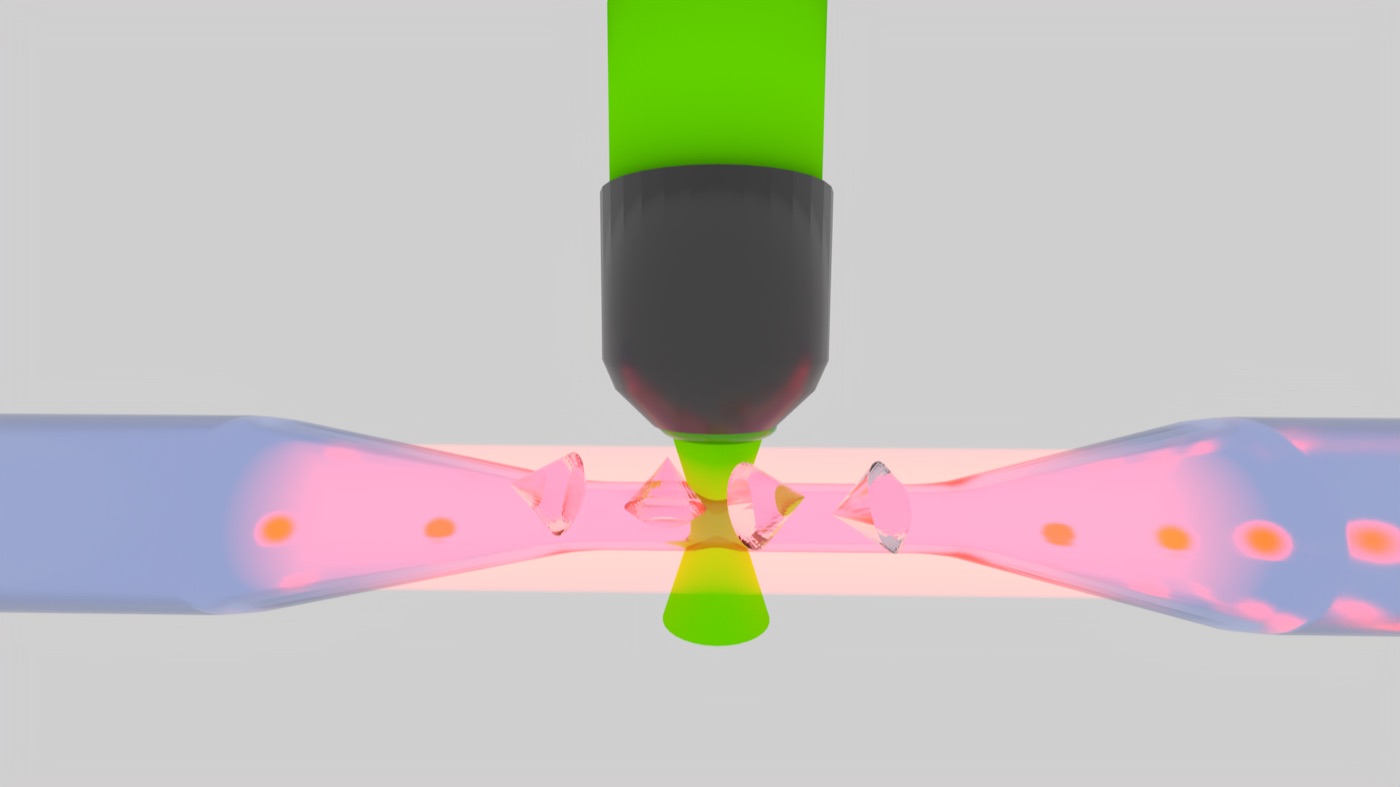
Quantum emitters coupled to optical nanowaveguides
We couple single colloidal quantum emitters to optical nanowaveguides such as tapered optical nanofibers, collecting their emission into a single guided mode toward compact integrated single-photon sources.
Previous activities
Hybrid Quantum Information Processing
The hybrid approach of quantum information processing consists in elaborating new quantum protocols by mixing techniques and quantum states of two traditionally separated domains: the "discrete" way of encoding information, playing on the corpuscular aspect of light, and the "continuous" way, based on the wave nature of photons.
Giant nonlinearities of emitters highly coupled to light
Quantum nanophotonics blends expertise in solid-state physics and optics, allowing highly coherent quantum dots (quasi-perfect two-level systems) to be strongly coupled to light through high-quality nanophotonic structures.
Polarization-entangled photon pairs on a silicon photonic chip
Realizing photonic circuits where photons replace electrons (circuits less sensitive to heat, with higher data-transfer rates), with one of the best sources of entangled photon pairs in semiconductors.